data science vs data analytics

Difference Between Data Science, Data Analytics & Data Analysis

In today’s digital world, terms like Data Science, Data Analytics, and Data Analysis are often used interchangeably. But are they the same? 🤔 Not really. Each has its own focus, tools, and career path.

Data Science

Focuses on predictive models, AI & machine learning to discover new insights.

Data Analytics

Focuses on business insights, dashboards & KPIs to improve decision-making.

Data Analysis

Focuses on examining datasets to find trends, summaries, and reports.

Let’s break down the key differences with examples, comparison tables, and FAQs to help you choose the right path.

Data Science vs Data Analytics vs Data Analysis — What each truly does

Below we unpack each discipline in simple language, show typical tools, deliverables, and give a real-world example so readers instantly see where each fits.

Data Science — Innovate & Predict

Focus: Building predictive models, machine learning systems, and extracting patterns that lead to new products or features.

Common techniques: Supervised & unsupervised ML, deep learning, NLP, feature engineering.

Tools: Python (scikit-learn, TensorFlow, PyTorch), R, Jupyter, big-data frameworks.

Deliverable: A model or system (e.g., churn prediction API, recommendation engine).

Example: A streaming service builds a recommendation model that suggests shows based on watch history and predicted preferences.

Data Analytics — Measure & Improve

Focus: Turning data into actionable business insights — dashboards, KPIs, A/B test analysis.

Common techniques: Aggregations, segmentation, trend analysis, KPI monitoring.

Tools: SQL, Power BI, Tableau, Excel, Looker.

Deliverable: Dashboards, regular reports, ad-hoc analyses that guide business decisions.

Example: The product team uses dashboards to track daily active users, conversion funnels, and decides to increase onboarding prompts after seeing a drop-off.

Data Analysis — Explore & Explain

Focus: Investigating specific questions using descriptive statistics and hypothesis testing.

Common techniques: Descriptive stats, correlation, time-series summary, cleaning & transformation.

Tools: Excel, SQL, pandas (Python), R.

Deliverable: Cleaned datasets, insights write-ups, and one-time analysis reports.

Example: An analyst examines last quarter’s sales dataset to explain why product X underperformed in Region Y.
  • Timeframe: DS → long-term models, DA → ongoing reports, Analysis → short-term deep-dive
  • Output: Models / APIs | Dashboards / KPIs | Reports / Summaries
  • Skill overlap: SQL + statistics + storytelling are common to all

Want a **visual table** next? I’ll build a clean, SEO-friendly comparison table (perfect for featured snippets) in the next section — say “table”.
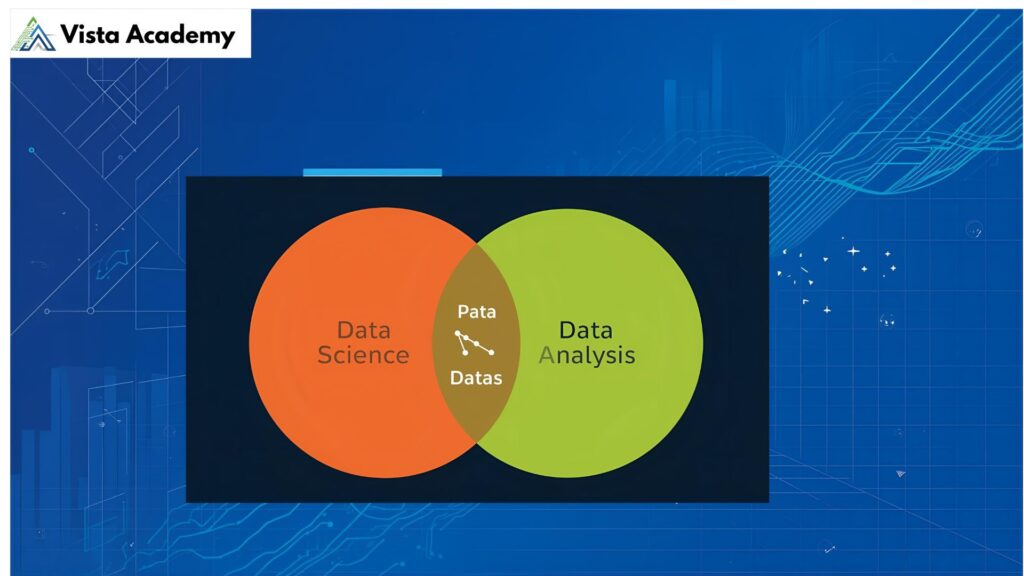
Key Differences — Table (Data Science · Data Analytics · Data Analysis)

Quick, copy-ready comparison table — perfect for readers and search engines. The table highlights focus, techniques, tools, deliverables and typical career roles.

Aspect Data Science Data Analytics Data Analysis
Primary focus Predictive models, ML systems, new product features Business insights, KPIs, optimization Exploration, reporting, answering specific questions
Typical techniques ML (supervised/unsupervised), deep learning, NLP Aggregation, segmentation, A/B analysis, trend analysis Descriptive stats, hypothesis testing, data cleaning
Common tools Python, R, TensorFlow, Spark, Jupyter SQL, Power BI, Tableau, Looker, Excel Excel, SQL, pandas, R
Deliverables Models, APIs, research notebooks, production systems Dashboards, reports, KPI trackers Analytic reports, cleaned datasets, visualizations
Typical time horizon Long-term (model training & iteration) Ongoing (weekly/daily business reporting) Short-term (one-off investigations)
Who does it? Data Scientists, ML Engineers, Research Engineers Data Analysts, BI Analysts, Analytics Managers Data Analysts, Reporting Analysts, Domain Experts

Tip: Use this table inside your article near the top (after intro) to improve the chance of a featured snippet for queries like “difference between data science and data analytics”.

Real-world Examples & Mini Case Studies

Short, practical case studies to show *exactly* where Data Science, Data Analytics and Data Analysis create value — quick to read, easy to share.

Case: Recommendation Engine (Data Science)

Problem: Users drop-off after viewing a few items — low engagement.

  • Approach: Build a collaborative filtering + content-based hybrid model using Python & TensorFlow.
  • Data used: User clicks, watch-time, past purchases, item metadata.
  • Outcome: +18% click-through rate on suggested items; +12% conversion in 3 months.

Why this is Data Science: Predictive modeling, feature engineering, and deploying a model to production.

Case: Marketing Funnel Optimization (Data Analytics)

Problem: Paid campaigns drive traffic but ROAS is low.

  • Approach: Build dashboards in Power BI; segment users by acquisition channel and funnel stage.
  • Data used: Ad spend, session behaviour, conversion funnels, LTV cohorts.
  • Outcome: Identified 2 underperforming channels → reallocated budget → improved ROAS by 27% in 6 weeks.

Why this is Data Analytics: KPI monitoring, dashboards and actionable business decisions.

Case: Quarterly Sales Drop Investigation (Data Analysis)

Problem: Product X sales down 22% vs previous quarter in Region Z.

  • Approach: Clean & filter sales CSV in pandas; compare price changes, promo calendar, and inventory logs.
  • Data used: Sales, discounts, stock-outs, competitor prices.
  • Outcome: Found simultaneous supplier shortage + price increase led to stock-outs → corrective action restored availability; sales rebounded by 15% after supply fix.

Why this is Data Analysis: Focused diagnostic analysis using descriptive statistics and domain context.

Tip: Short case studies like these increase user engagement and help recruiters see practical skills — add them near the middle of your article for stronger on-page signals.

Data Analytics – Core Stack

SQL, Excel, Power BI/Tableau, basic Python (pandas), statistics, stakeholder communication

Data Science – Core Stack

Python, NumPy/Pandas, scikit-learn, ML pipelines, model evaluation, experimentation

Shared Foundations

SQL & data cleaning, data visualization, business understanding, storytelling with data

Why Data Science & Analytics Are Important

In today’s digital economy, every business — from startups to Fortune 500s — runs on data. But raw data is meaningless without the right tools and expertise. That’s where Data Science, Data Analytics, and Data Analysis come in. Together, they drive smarter decisions, efficiency, and innovation.

🔍 Better Decision-Making

Executives use dashboards and KPIs to guide product launches, pricing, and resource allocation.

⚡ Operational Efficiency

Retailers forecast demand to reduce stock-outs, banks detect fraud in real time, and factories minimize downtime.

🚀 Innovation & Growth

Streaming apps recommend content, e-commerce sites personalize offers, and healthcare predicts patient risks.

In short: data is the new oil, but these disciplines are the engines that refine it into actionable power.

Career Path: Data Scientist vs Data Analyst vs Data Engineer

One of the most common questions is: “Which career is right for me — Data Scientist, Data Analyst, or Data Engineer?” Here’s a simplified roadmap.

👨‍🔬 Data Scientist

  • Build predictive & ML models
  • Skills: Python/R, ML, statistics, deep learning
  • Avg Salary: Higher, but requires advanced skills

📊 Data Analyst

  • Turn raw data into reports & dashboards
  • Skills: Excel, SQL, Power BI/Tableau
  • Avg Salary: Entry-mid level, easier to start

🛠️ Data Engineer

  • Design data pipelines & warehouses
  • Skills: SQL, Python, Spark, cloud platforms
  • Avg Salary: High demand across industries

Frequently Asked Questions — Data Science, Data Analytics & Data Analysis

Short, searchable answers to the top queries people ask. Use this section to capture featured snippets and improve CTR.

What is the difference between Data Science and Data Analytics?
Data Science builds predictive models and ML systems to create new capabilities. Data Analytics focuses on analysing historical data to produce dashboards and actionable business insights.
How is Data Analysis different from Data Analytics?
Data Analysis is often a focused, one-off investigation using descriptive statistics and cleaning. Data Analytics is broader and ongoing — creating regular reports, KPIs and monitoring business performance.
Can you show the difference in tabular form?
Yes — use a simple table with rows for Focus, Techniques, Tools, Deliverables, and Typical Roles. (We placed a ready table earlier in this article — copy it near the top for best SEO results.)
Is Data Science just a buzzword?
No — while “Data Science” is sometimes overused, it represents concrete practices (ML, modelling) that power real products, automation, and research when applied correctly.
What is Big Data vs Data Analytics vs Data Science?
“Big Data” describes scale — large, fast or complex datasets. Data Analytics extracts insights from data (any scale). Data Science builds predictive systems that may operate on big data.
Which career should I choose: Data Analyst or Data Scientist?
If you enjoy dashboards, SQL and business metrics, start as a Data Analyst. If you like coding, stats and ML, aim for Data Scientist. Both paths are valuable — many professionals move from analytics into data science later.
Do tools differ between these fields?
Yes — Data Scientists often use Python/R, TensorFlow, and notebooks. Data Analysts use SQL, Excel, Power BI/Tableau. Data Analysis commonly uses SQL, Excel, and pandas for one-off studies.
How do advanced analytics and data science differ?
Advanced analytics (e.g., predictive and prescriptive methods) overlaps heavily with data science. The difference is usually context: advanced analytics is a function inside business analytics; data science often includes research and product engineering aspects.
What’s the fastest way to get into data analytics?
Learn SQL and Excel first, build 2-3 dashboards (Power BI/Tableau), and add one project that cleans messy real data. A strong portfolio and clear case studies beat certificates alone.

Want these FAQs added to your page as JSON-LD for search engines? Paste the script below into your page head or ask me to generate a single copy that’s ready to paste.

Start with Analytics, Grow into Data Science

Begin with our beginner-friendly Data Analytics path (SQL → Excel → Power BI → Python basics). Move to Data Science once you’re comfortable with coding and statistics.

🚀 Explore Data Analytics Course

🌐 Quick Answer – Data Science vs Data Analytics

English: Data Analytics focuses on describing and explaining what happened using SQL, BI tools, and statistics. Data Science goes deeper into prediction and automation with machine learning, Python, and advanced statistics.

हिंदी (Hindi): डेटा एनालिटिक्स मुख्य रूप से यह समझने पर केंद्रित है कि “क्या हुआ और क्यों हुआ“, जहां SQL, Excel और BI टूल्स का उपयोग किया जाता है। वहीं डेटा साइंस मशीन लर्निंग और एडवांस स्टैटिस्टिक्स का प्रयोग करके यह बताता है “आगे क्या होगा और क्या करना चाहिए“।

Empower Uttarakhand’s Youth for a Data-Driven Job!

IF YOU CAN DREAM YOU CAN DO IT

Vista Academy builds careers in Data Analytics and Business Analytics. Others offer courses, but no one does it better than us.
Student Success

🌟 Student Success Stories – Vista Academy Alumni Achievements

🎓 Anjali Verma

From Commerce Graduate to Data Analyst at Accenture. Completed Vista’s 6-month course and landed her first tech job within 2 months of graduation.

👨‍💻 Rohit Rawat

Previously in BPO, Rohit upskilled with Python & Power BI at Vista. Now working as Business Intelligence Executive at a Gurugram startup.

📊 Meena Joshi

Working mom who switched careers to tech. With Excel + SQL training, she now consults with a data firm remotely from Dehradun.

👨‍🏫 Chandresh Aggarwal

Excelled in Python and SQL at Vista Academy. Today, he teaches as Faculty (Python & SQL) at Invertis University, Bareilly — inspiring the next generation of analysts.

🖼️ Vista Academy Moments

Certificate Vista Design Vista Students 1

✨ What Our Students Say

“Vista Academy didn’t just teach me tools, they helped me become job-ready.” – Ritu Sharma     “Thanks to Vista, I transitioned from B.Com to a Data Analyst role within 6 months!” – Akash Verma     “Best institute in Dehradun for Data Analytics with real mentoring.” – Priya Joshi     “I cracked interviews using the exact mock rounds at Vista!” – Manish Rawat
Contact Vista Academy for Data Science Training in Dehradun

Vista Academy Contact Information

📍 Address:
316/336, Park Rd, Laxman Chowk,
Dehradun, Uttarakhand 248001

📞 Phone: +91 94117 78145

📧 Email: thevistaacademy@gmail.com

📞 Call Now

Open Monday to Friday, 8:00 AM – 6:00 PM