Table of Contents
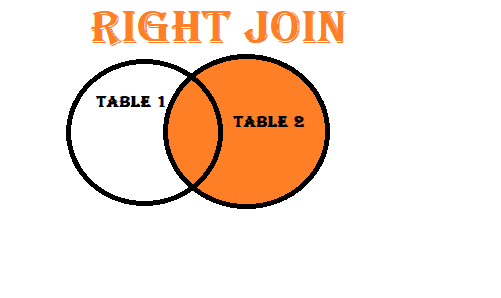
ToggleThe SQL RIGHT JOIN (also known as RIGHT OUTER JOIN) combines data from two or more tables. Unlike the LEFT JOIN, the RIGHT JOIN retrieves all rows from the right table, and matching rows from the left table. If no match is found, NULL values are returned for the left table’s columns.
A RIGHT JOIN returns all rows from the right table (in our case, the departments table), and matching rows from the left table (the employees table). If there is no match, NULL values are shown for columns from the left table.
Example: A RIGHT JOIN is useful when you want to find all departments, even those without any employees assigned.
SELECT table1.column_name, table2.column_name, ...
FROM table1
RIGHT JOIN table2
ON table1.common_column = table2.common_column;
Let’s perform a RIGHT JOIN on the employees and departments tables. This will retrieve all departments, even those without any employees.
| EmployeeID | EmployeeName | DepartmentID | City |
|---|---|---|---|
| 1 | Rahul Sharma | 101 | Mumbai |
| 2 | Anjali Verma | 102 | Delhi |
| 3 | Karan Gupta | 103 | Bangalore |
| 4 | Priya Singh | NULL | Kolkata |
| DepartmentID | DepartmentName | HeadOffice |
|---|---|---|
| 101 | IT | Mumbai |
| 102 | HR | Delhi |
| 103 | Finance | Bangalore |
| 104 | Marketing | Chennai |
We can use the following RIGHT JOIN query to fetch all department details, even those without employees:
SELECT employees.EmployeeID, employees.EmployeeName, employees.City, departments.DepartmentName, departments.HeadOffice
FROM employees
RIGHT JOIN departments
ON employees.DepartmentID = departments.DepartmentID;
| EmployeeID | EmployeeName | City | DepartmentName | HeadOffice |
|---|---|---|---|---|
| 1 | Rahul Sharma | Mumbai | IT | Mumbai |
| 2 | Anjali Verma | Delhi | HR | Delhi |
| 3 | Karan Gupta | Bangalore | Finance | Bangalore |
| NULL | NULL | NULL | Marketing | Chennai |
The query performed a RIGHT JOIN between the employees and departments tables using the common column DepartmentID. The result includes all departments, even those without any employees. Where an employee is associated with a department, the employee details are shown. Where no employees are associated with a department (like **Marketing**), NULL values are returned for the employee-related columns.
Here’s what the output shows:
In conclusion, the SQL RIGHT JOIN returns all rows from the right table, along with matching rows from the left table. If there’s no match, NULL values are returned for columns from the left table. It’s useful for finding all records in the right table, including those without matching records in the left table.